Broken springs
A broken torsion or extension spring can leave the door extremely heavy or stop it from opening. Springs are selected according to the door and spring system rather than by appearance alone.
Serving Madison, Florida
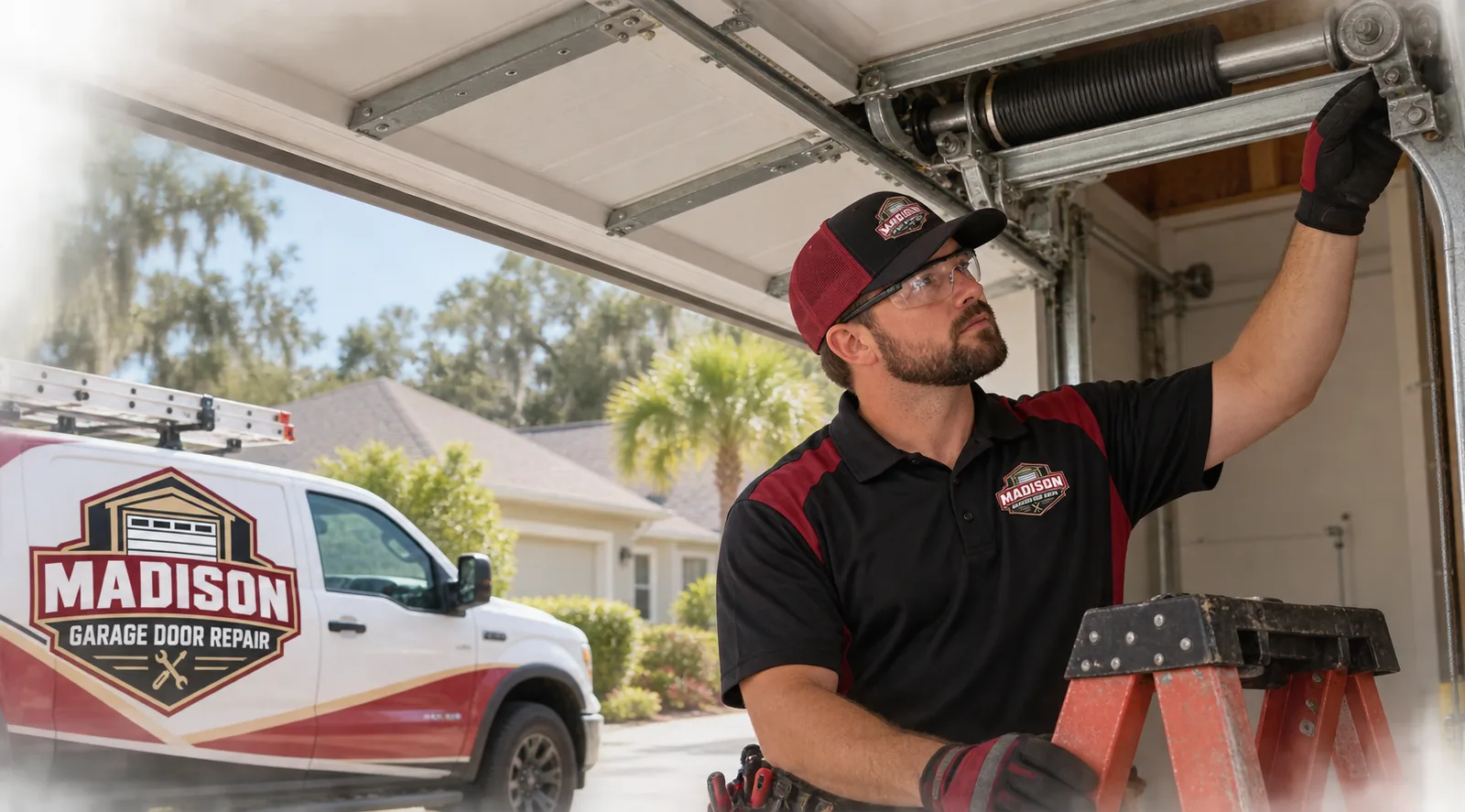
Emergency garage door repair in Madison, Florida
A jammed, damaged, or unsecured garage door needs a careful response. Madison Garage Door Repair can assess the failure, explain the repair, and help restore safe operation.
Identify the failure before forcing the door
When a garage door will not open, close, or stay on its tracks, forcing it can make the damage worse. Emergency garage door repair in Madison, FL begins with identifying whether the failure involves the spring system, cables, tracks, rollers, hinges, panels, opener, or safety controls. Madison Garage Door Repair focuses on the immediate fault and the condition of the connected parts before repair work begins.
Keep people, pets, and vehicles away from a crooked or hanging door. Do not pull a loose cable, touch a torsion spring, or remove hardware that remains under tension. If the door is stuck open, secure the interior entry into the home and move valuables out of easy view when it is safe to do so. If you smell smoke, see sparking, or find damaged electrical wiring, disconnect power only when that can be done safely and contact emergency services when there is an active fire risk.
Garage doors are large moving assemblies. A problem that looks like an opener failure may actually be a broken spring that leaves the motor unable to lift the door. A door that rises unevenly may have a cable, drum, roller, track, or spring issue. A proper inspection separates the cause from the symptoms.
Springs, tracks, cables and controls
A broken torsion or extension spring can leave the door extremely heavy or stop it from opening. Springs are selected according to the door and spring system rather than by appearance alone.
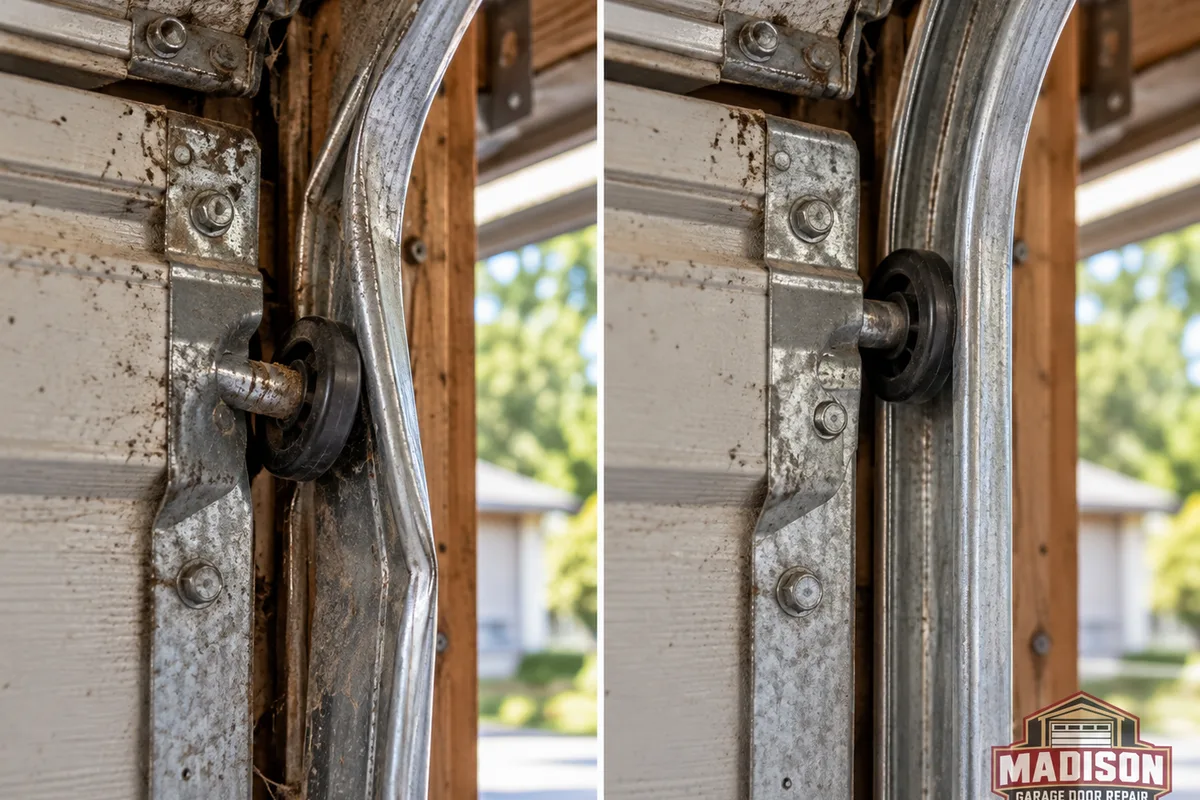
A door may sit crooked after a roller leaves the track or a cable loses tension. Operation should stop until the tracks, rollers, cables, drums, and door position are checked.
Bent track, damaged rollers, shifted hardware, or an obstruction can stop travel. Continuing to press the wall control may strain the opener or deform additional parts.
Lift cables work under substantial tension. Frayed, slack, or displaced cables require inspection of the drums, springs, bottom brackets, and related hardware.
An opener that hums, reverses, or does not respond may have a power, control, gear, travel-limit, force-setting, or door-balance problem.
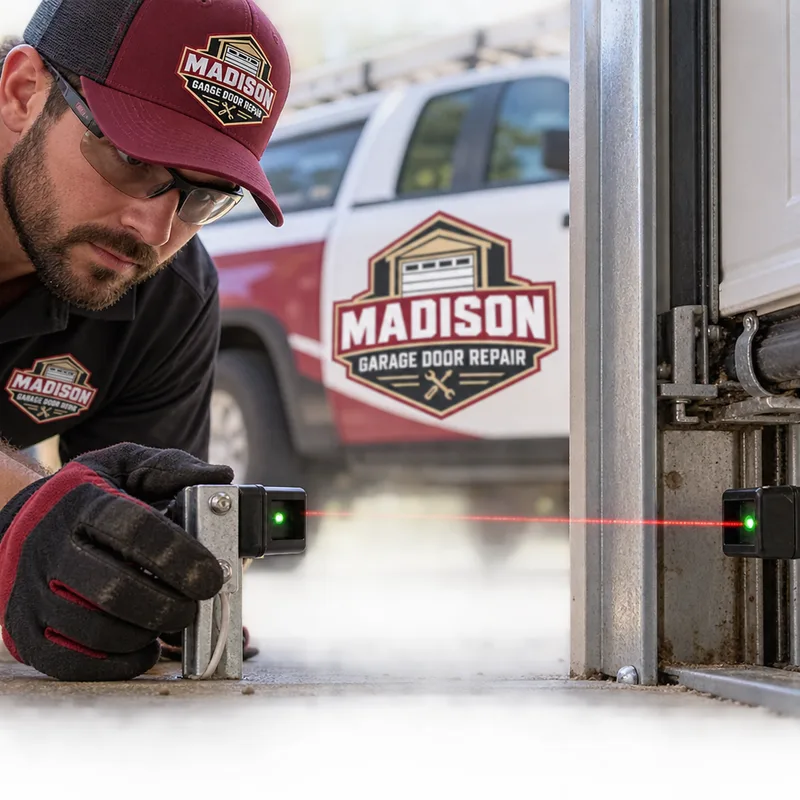
Photo-eye alignment, blocked sensors, damaged wiring, track resistance, or opener settings may prevent closing. Safety controls should be tested after the fault is corrected.
Keep clear and avoid forced movement
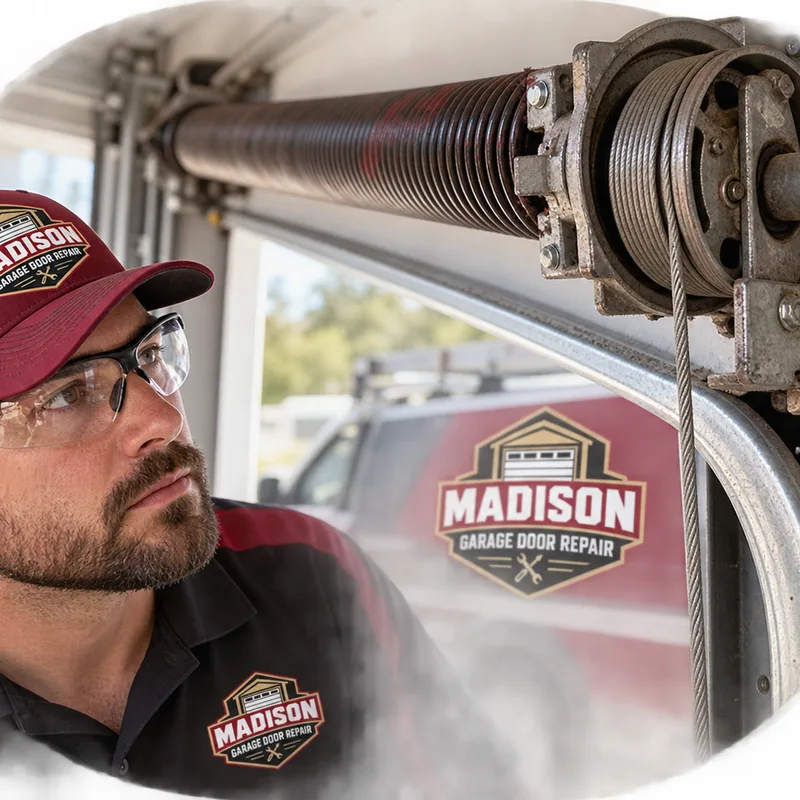
Stop using the opener if the door is crooked, a cable is loose, a spring is visibly separated, or a roller has left the track. Repeated cycling can pull hardware out of position and add stress to the opener rail or door panels.
Leave the door where it is unless movement is necessary to prevent an immediate hazard. Do not stand beneath it. The red emergency-release cord disconnects the trolley from the opener, but using it when the door is open or poorly balanced can allow the door to fall. Manual release is not a safe first step when a spring or cable may have failed.
Florida thunderstorms and power interruptions can cause opener symptoms that resemble a mechanical problem. After power returns, check whether the opener has power and whether a breaker or GFCI has tripped. Stop if the door binds, lifts unevenly, or feels unusually heavy. Lightning-related electrical damage and mechanical failure require different repairs, so accurate diagnosis matters.
From the first description to final testing
The door position, balance, spring assembly, cables, drums, tracks, rollers, hinges, opener, and safety controls are checked as applicable. This helps identify the cause and any connected damage.
After the approved repair, the door is operated through its travel and checked for balance, alignment, secure hardware, and proper opener and safety-control behavior.
Correct the fault, not only the symptom
A garage door repair should correct the failure without hiding a related problem. If a spring breaks, the door's weight and spring arrangement affect replacement selection. If a cable comes off a drum, the inspection must determine why tension was lost and whether the cable, drum, bearing, track, or spring contributed. A bent track may be adjustable in some cases, while sharply creased metal or damaged mounting points may require replacement.
Panel damage also varies. Cosmetic dents are different from damage that disrupts roller alignment, section joints, hinges, or the door's ability to travel through the track radius. Opener work requires the same distinction. Replacing a motor component will not correct a door that is too heavy because its counterbalance system has failed.
Madison's heat, humidity, heavy rain, and storm activity can expose worn seals, corroded hardware, and electrical issues. Those conditions do not identify the fault by themselves, but they are useful context during inspection. For nonurgent faults and broader maintenance needs, garage door repair in Madison can address problems before the door becomes stuck or unsecured.
Keep clear of a door that is trapped open, hanging unevenly, or blocking a vehicle.
Alignment, travel and safety checks
Clear answers for a stuck or damaged door
Tell Madison Garage Door Repair whether the door is open, closed, crooked, or making unusual sounds. A clear description helps identify the safety concern and plan the appropriate urgent response.