Remote or Keypad Failure
Fresh batteries do not resolve every control problem. A remote may need to be reprogrammed, its contacts may be worn, or the receiver and keypad wiring may require testing.
Serving Madison, Florida
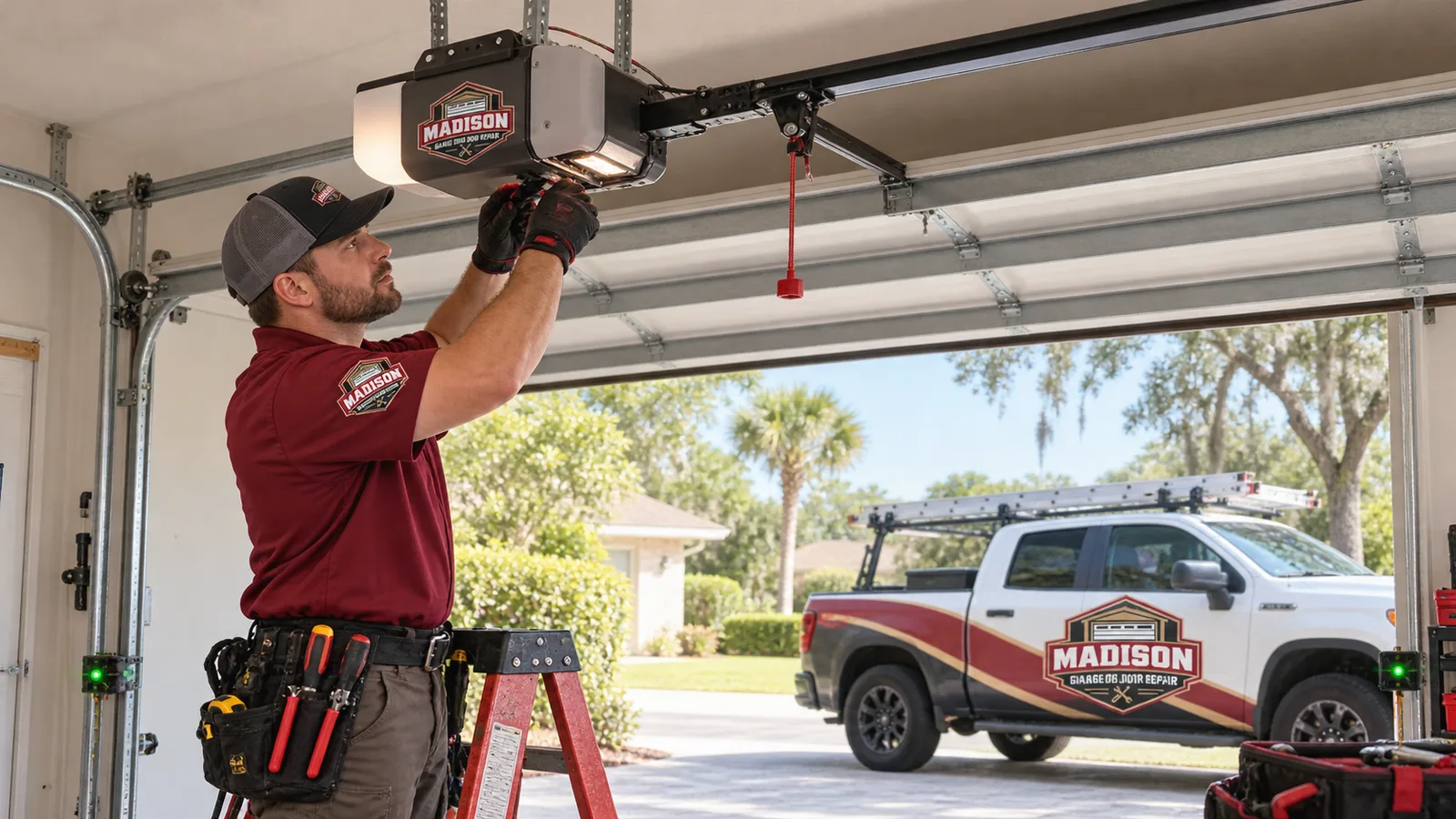
Garage door opener service in Madison, Florida
Get clear answers about faulty remotes, safety sensors, motors, keypads, and wall controls so your garage door can operate reliably again.
Find the source of the failure
A door that will not respond, reverses unexpectedly, or stops before completing its travel can disrupt the first and last trip of the day. Madison Garage Door Repair provides garage door opener repair in Madison for problems involving transmitters, keypads, photo-eye sensors, wall controls, wiring, drive systems, and opener motors.
The opener is only one part of the operating system. A technician should also consider door balance, track resistance, rollers, hinges, and spring performance before blaming the motor. An opener may strain or stop because the door is binding or too heavy to lift correctly. Running an opener against that resistance can damage its drive components.
Some symptoms point beyond the opener itself. A crooked door, a broken spring, or a cable that has left its drum requires broader garage door repair in Madison rather than repeated adjustments to the controls. Separating opener faults from mechanical door problems is the first step toward an appropriate repair.
Controls, safety circuits and drive parts
Fresh batteries do not resolve every control problem. A remote may need to be reprogrammed, its contacts may be worn, or the receiver and keypad wiring may require testing.
Misaligned photo eyes, dirty lenses, damaged low-voltage wire, or direct sunlight at sensor height can interrupt the safety circuit and make the door reverse.
A worn drive gear, disconnected trolley, damaged belt or chain, or failed carriage can let the motor run while the door remains still.
Loose connections, failing logic boards, heat-related shutdowns, radio interference, and inconsistent power can produce faults that seem to come and go.
Incorrect travel limits or force settings may cause reversal, but physical resistance in the door must be ruled out before those settings are changed.
A faulty wall station, lock mode, light socket, control board, or wiring connection may affect operation even when the motor still has power.
Test before changing components
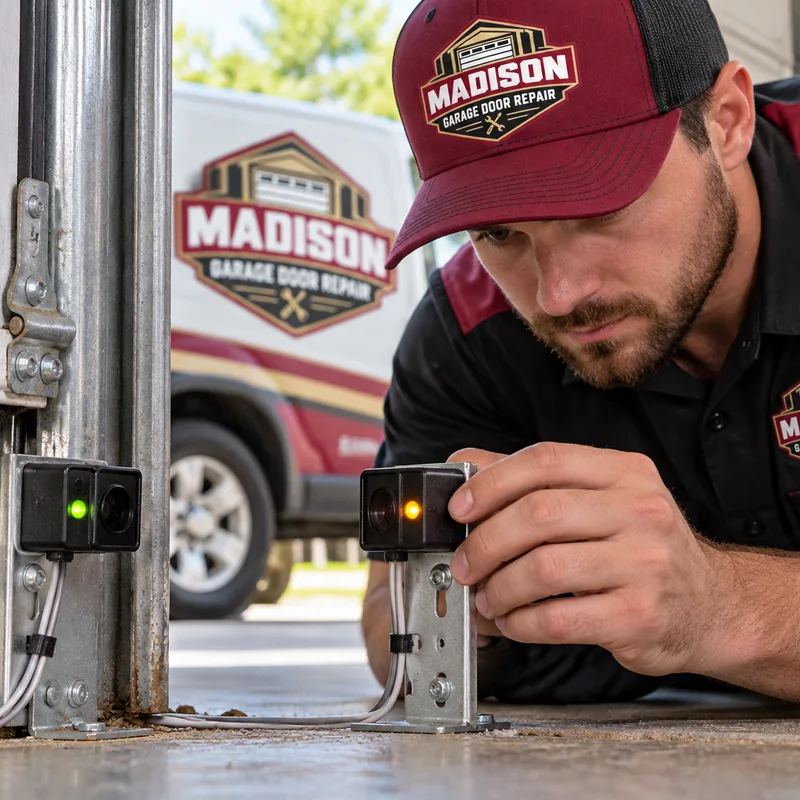
A useful diagnosis starts with the exact symptom. Does the door respond to the wall control but ignore every remote? Does it open normally yet reverse when closing? Do the opener lights flash after an attempted cycle? Those details help isolate the control, safety, or drive circuit.
The inspection can include the power source, release mechanism, rail and trolley, drive components, terminal connections, photo-eye alignment, travel limits, and force response. The door should also be disconnected from the opener and moved by hand when it is safe to do so. It should travel without severe binding and remain reasonably balanced. If it feels unusually heavy, the opener may be reacting to a spring or door problem rather than causing it.
Madison's heat and humidity can be hard on garage electronics and metal components, especially in spaces without climate control. Storm-related power interruptions can also coincide with lost programming or damaged control electronics. These conditions do not prove the cause, but they are relevant when tracing an intermittent failure.
From symptom to verified operation
The technician checks the opener system and looks for door resistance, damaged hardware, or balance trouble that could imitate an opener fault.
Testing narrows the fault to items such as sensors, wiring, controls, programming, drive parts, or the motor assembly. The proposed work should address the verified cause.
Applicable parts are repaired or replaced, remotes may be programmed, and travel or force settings are adjusted only after the door's mechanical movement is checked.
The door is operated through opening and closing cycles. Safety reversal, photo-eye response, wall controls, remotes, keypad access, and manual release operation are checked as applicable.
Choose the appropriate scope
Repair is often reasonable when the opener is compatible with the door, the needed part is available, and the rest of the unit operates correctly. Misaligned sensors, damaged wiring, worn gears, control problems, and programming faults can be limited repairs.
Replacement becomes a practical consideration when a major assembly has failed, repair parts are discontinued, or the unit lacks required safety equipment. Residential garage door openers manufactured for sale in the United States since 1993 are required to have an external entrapment-protection system, commonly photo-electric sensors near the floor. A unit without functional protection should not be kept in service through improvised wiring or bypasses.
Opener choice also has to match the door. Horsepower or horsepower-equivalent ratings do not correct broken springs, poor balance, or binding tracks. If replacement is recommended, compatibility, rail configuration, door size and weight, ceiling clearance, access controls, and available power all matter.
Drive, control and access systems
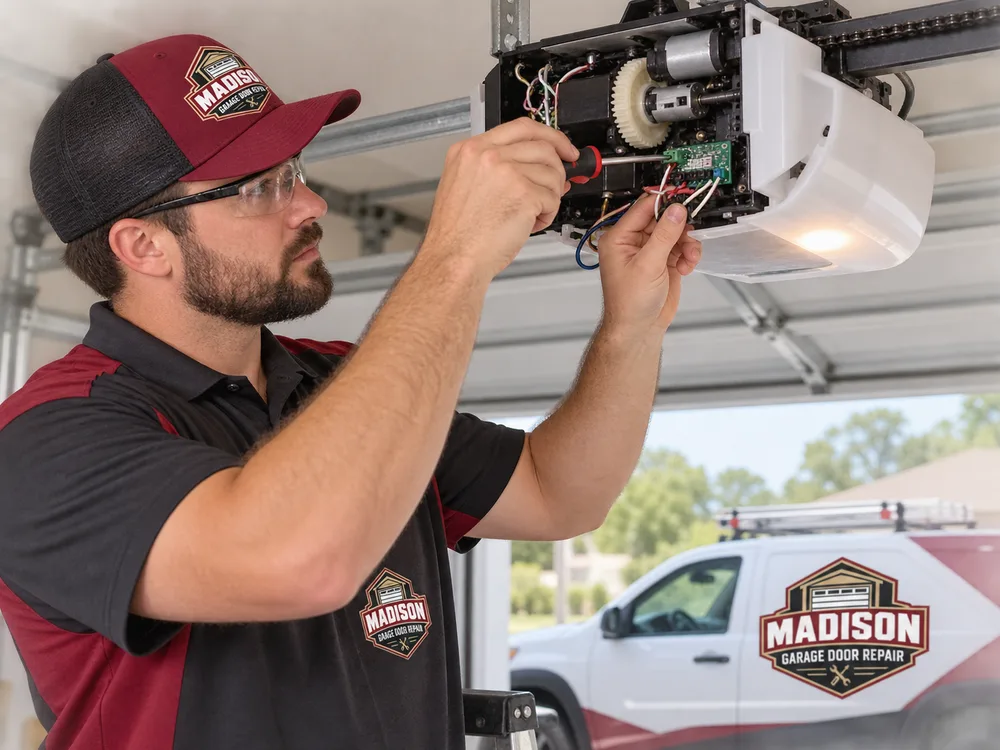
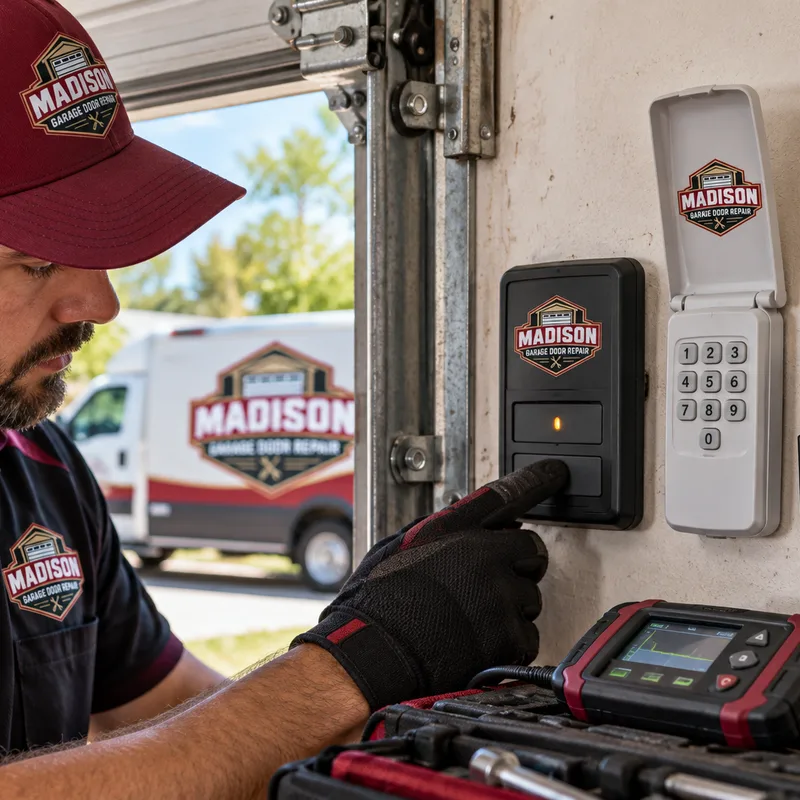
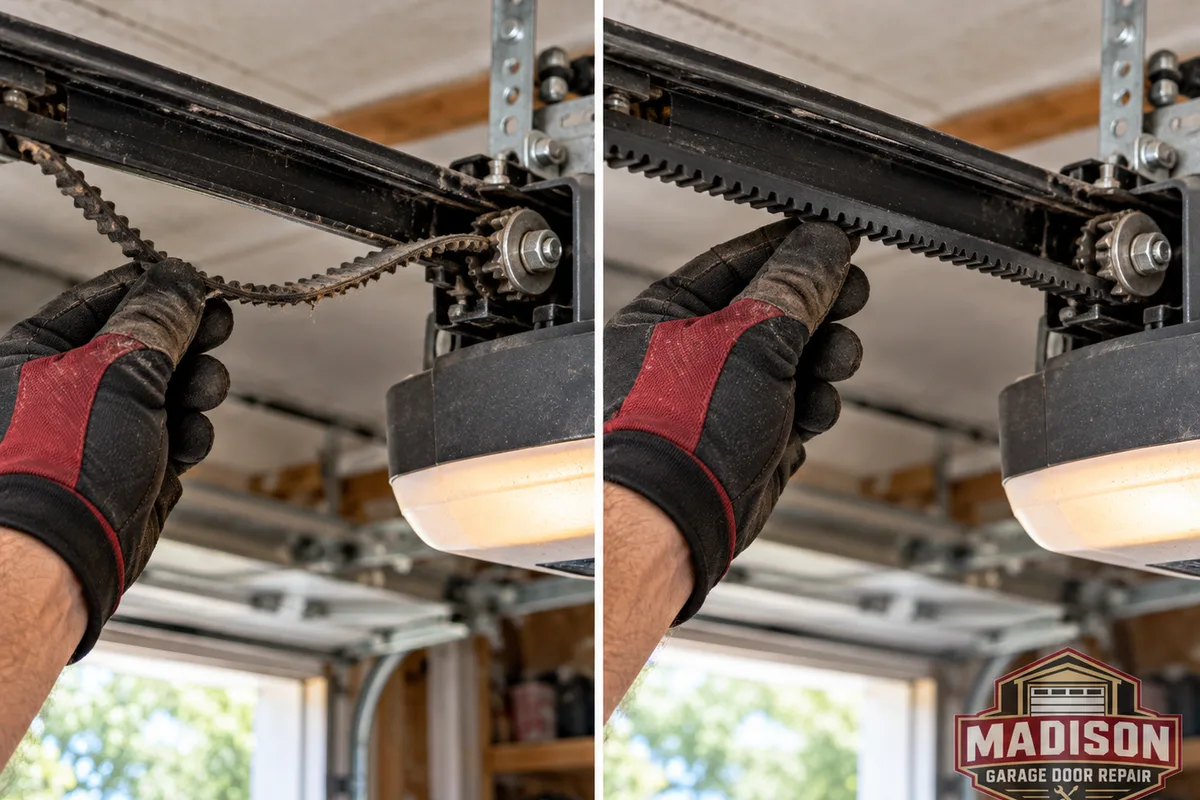
If the opener hums, reverses, ignores controls, or works only some of the time, the opener and door should be inspected before repeated operation causes more wear.
Answers about opener faults
Opener repair includes checking the controls, door movement, safety sensors, rail, trolley, and drive components.