Vehicle or Object Impact
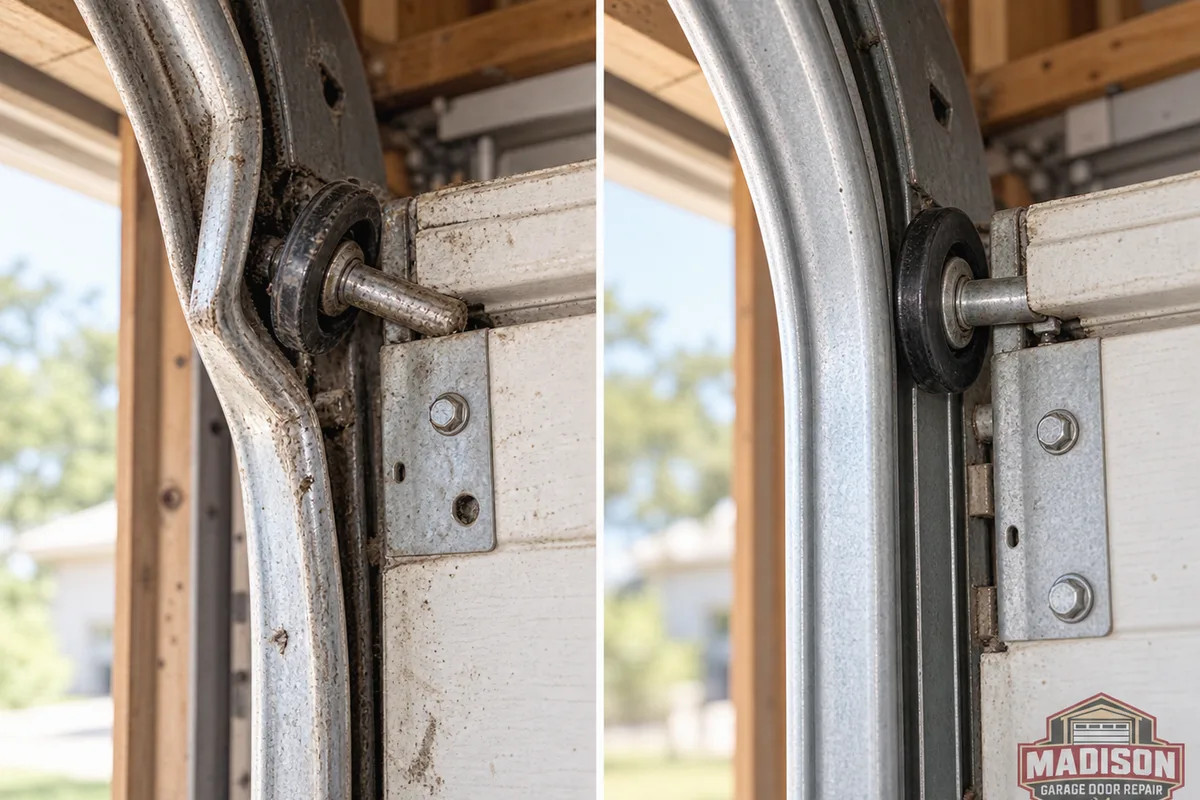
A light strike can bend a vertical track, loosen its brackets, or knock a roller out of position. The damaged area must be checked before the door is moved.
Serving Madison, Florida
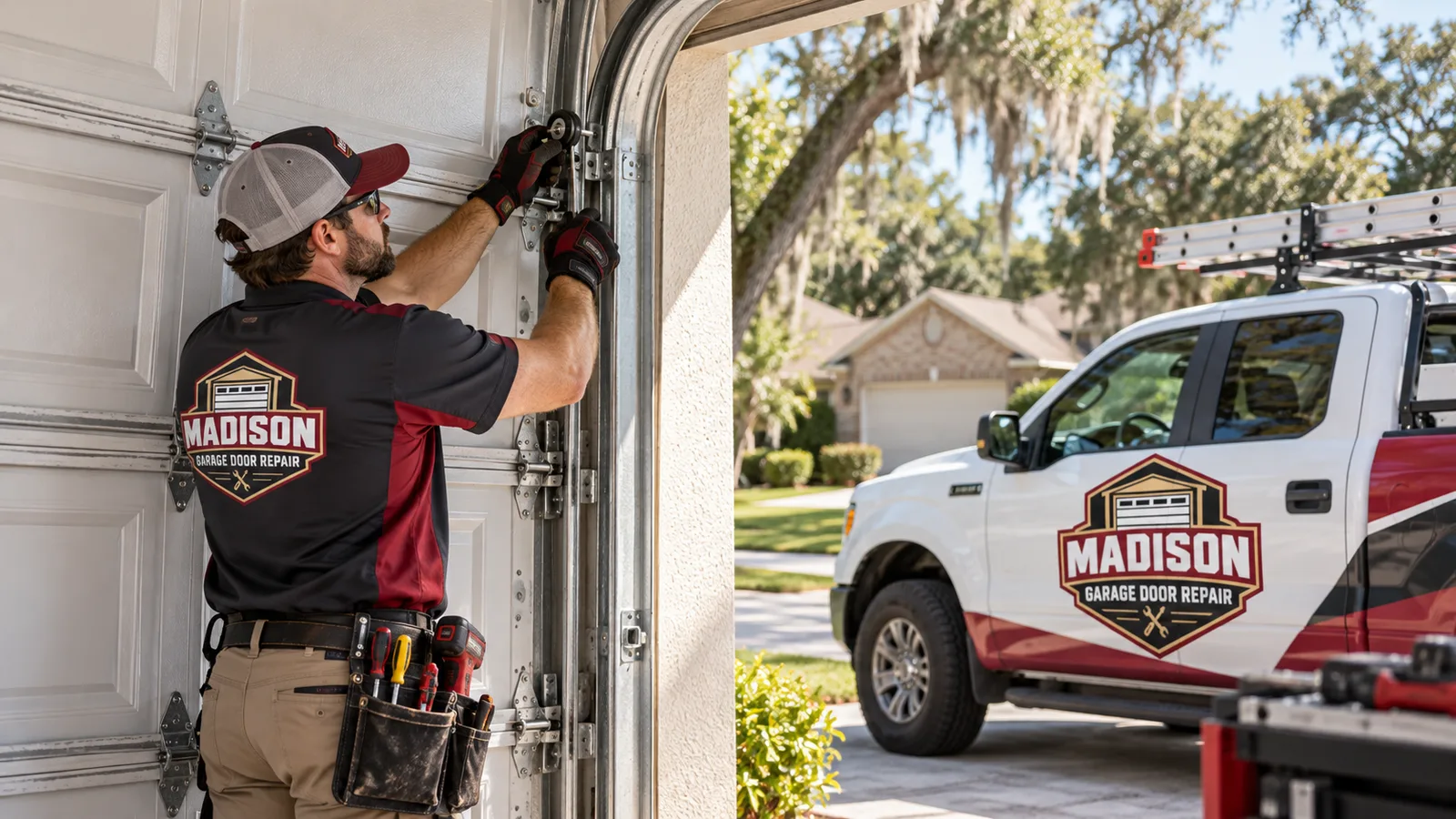
Off-track garage door service in Madison, Florida
Restore safe, smooth door movement with a careful inspection of the rollers, tracks, cables, and supporting hardware before repairs begin.
Stop movement and protect the opening
Garage door off track repair in Madison, FL starts by stabilizing the door and finding out why the rollers left their intended path. Madison Garage Door Repair assesses the track alignment, rollers, hinges, lift cables, brackets, and fasteners before recommending the repair. The aim is to correct the underlying problem rather than push a roller back into place and leave damaged hardware behind.
Stop operating the door if one side hangs lower, a roller sits outside the track, a cable is loose, or a track has pulled away from its mounting surface. Do not use an automatic opener to force movement. A crooked door places uneven loads on the panels and hardware, and a partially raised door can fall without warning. Keep people, pets, and vehicles away until the assembly has been secured and inspected.
Madison's humid, storm-prone North Florida climate can expose garage hardware to moisture and wind-driven debris. Regular visual checks can catch surface corrosion, loose fasteners, and track obstructions before they interfere with travel. These checks are especially useful after severe weather, but adjustments involving cables, springs, or a suspended door should be left to a repair professional.
Find the cause before resetting the door
A light strike can bend a vertical track, loosen its brackets, or knock a roller out of position. The damaged area must be checked before the door is moved.
A cable that slips, frays, or loses tension can let one side rise faster than the other. Lift cables operate under tension and should not be handled as a do-it-yourself repair.
A seized wheel, cracked roller, bent stem, or missing bearing can prevent smooth travel and pull the door toward the edge of the track.
Vibration can loosen mounting fasteners or brackets. If the tracks are no longer parallel and properly spaced, rollers may bind or escape.
Debris in a track or an object beneath one side of the door can twist the assembly when the opener continues to push or pull.
A bent panel edge or failing hinge changes the position of adjacent rollers. Repair may require more than a track adjustment.
Inspect the complete path of travel
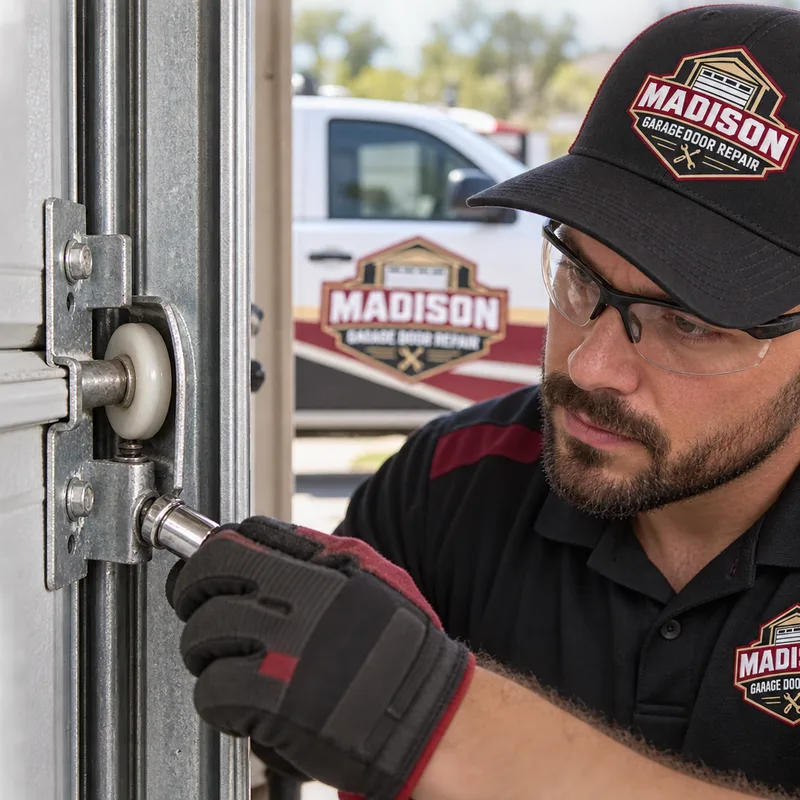
An off-track door is a symptom, not a complete diagnosis. The inspection begins with the door's position and weight distribution. A technician checks whether the rollers have escaped from a vertical, curved, or horizontal track and looks for deformation at the point where movement stopped.
Both tracks should remain securely attached and correctly aligned. Brackets, flag brackets, hinges, roller stems, bearings, drums, cables, and bottom fixtures are examined for damage or unusual wear. The technician also checks whether a panel has buckled or shifted enough to affect the roller path. If a cable has jumped a drum or the spring system is involved, the door must be controlled before tensioned parts are addressed.
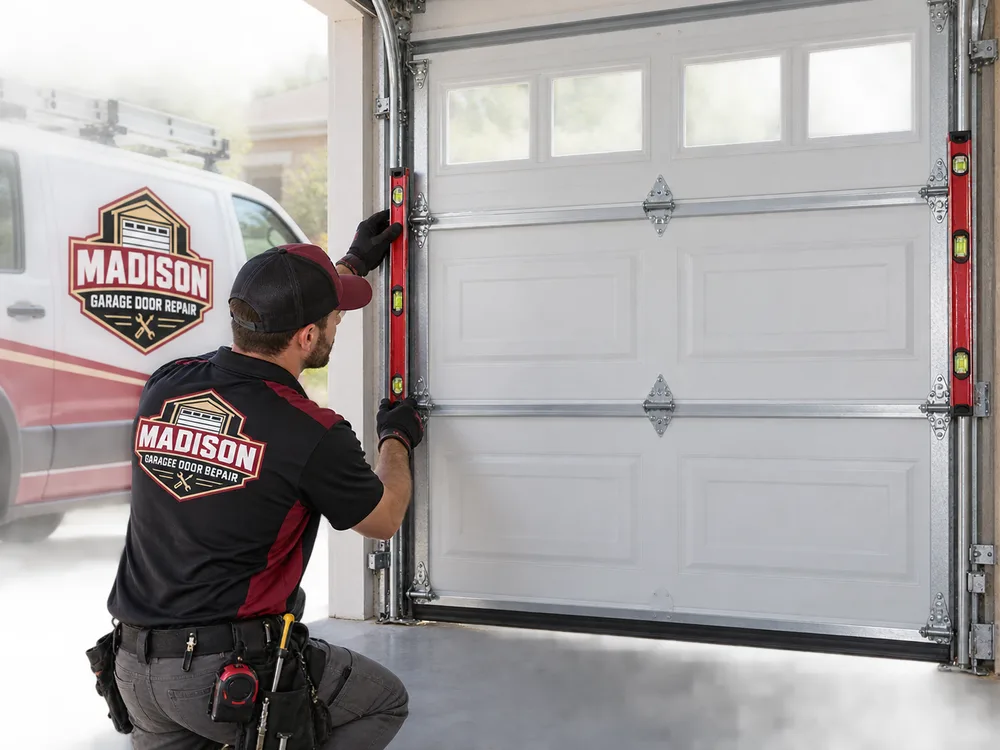
Once the mechanical repair is complete, the door should be moved through a controlled test cycle. The rollers need to remain seated, the sections must pass through the curved track without binding, and the door should not rack toward one side. The automatic opener and its safety reversal system can then be tested after the door moves correctly by hand. Broader opener, spring, or panel problems may require garage door repair in Madison, but the off-track work remains focused on restoring alignment and stable travel.
From stabilization to final testing
Madison Garage Door Repair first limits movement and supports the door as needed. This reduces the chance of a crooked or suspended section shifting during inspection.
The tracks and connected hardware are checked to determine whether impact damage, a failed roller, cable trouble, loose mounting points, or panel distortion caused the displacement.
Repair may include straightening a serviceable track, replacing damaged rollers or brackets, resetting hardware, and restoring correct alignment. Parts that are too deformed or worn for dependable operation may need replacement.
Rollers are returned to their proper path only after the cause has been addressed. Track position and spacing are adjusted so the sections can travel without pinching or excessive side movement.
The repaired door is cycled carefully to confirm balanced movement, proper roller seating, and clearance through the track curves. Opener operation is checked only after manual travel is safe.
A door that is crooked, jammed, or hanging by only part of its hardware should remain unused. Arrange an inspection so the door can be secured and the source of the displacement identified.
CALL NOW: (850) 290-0344Safe observations before service
Leave the door where it is unless its position creates an immediate danger. Disconnecting an opener does not make a damaged door safe to lift because the full weight may shift to the person holding it. Do not stand beneath the door, pull on a loose cable, remove a bottom bracket, or loosen spring hardware. These components can carry substantial tension even when the door appears stationary.
If the door is partly open, keep the opening clear and avoid parking beneath it. If it is closed but crooked, do not repeatedly press the wall control or remote. Continued opener use can bend the top section, strip the trolley, or worsen a track deformation. Take note of any impact, loud noise, cable movement, or roller failure that happened immediately before the problem. That history can make diagnosis faster.
After repair, basic upkeep can reduce avoidable trouble. Keep tracks clear of debris, watch for loose fasteners, and look for rollers that wobble or fail to turn. Tracks should be clean, but heavy grease inside them can collect grit and interfere with roller movement. Use only a lubricant suitable for garage door hinges, bearings, and rollers, following the product and door manufacturer's directions.
Alignment and roller seating
Answers before repair
Off-track repair includes checking the rollers, tracks, cables, hinges, and related hardware for damage.